
Getting people to your auto shop website is only half the job. The real challenge is figuring out how to convert website visitors into auto shop customers once they land. Most shop owners pour money into SEO and ads, then watch those visitors leave without calling or booking. The gap between traffic and revenue is almost always a structural problem. Your website either makes it easy to take the next step, or it quietly sends people to a competitor. This guide walks through what needs to change and exactly how to fix it.
Table of Contents
- Key Takeaways
- How to convert website visitors into auto shop customers
- Setting up your site for lead capture
- Executing your visitor engagement strategy
- Monitoring results and refining over time
- My honest take on what actually moves the needle
- How Glimmer Tech helps auto shops convert more visitors
- FAQ
Key Takeaways
| Point | Details |
|---|---|
| CTAs must be visible immediately | Place quote forms and call buttons above the fold so visitors act before they scroll away. |
| Speed wins the lead | Responding to inquiries within 5 minutes increases qualification rates by 21 times compared to waiting 30 minutes. |
| Transparency reduces drop-off | Showing your inspection process and pricing before asking for a booking builds trust and cuts visitor anxiety. |
| Mobile sticky buttons convert | Always-visible call and text CTAs on mobile capture more traffic that would otherwise abandon your site. |
| Track what actually matters | Set up form fill tracking, call tracking, and funnel visualization to find and fix the spots where visitors leave. |
How to convert website visitors into auto shop customers
Before getting into tactics, it helps to understand what conversion rate optimization (CRO) actually means for a service business like an auto shop. CRO is the practice of increasing the percentage of visitors who take a desired action, whether that is calling your shop, filling out a quote form, or booking an appointment. Most auto shop websites hover between a 1 and 2 percent conversion rate on generic templates. Purpose-built layouts with above-the-fold forms can push that number to 6 to 11 percent.
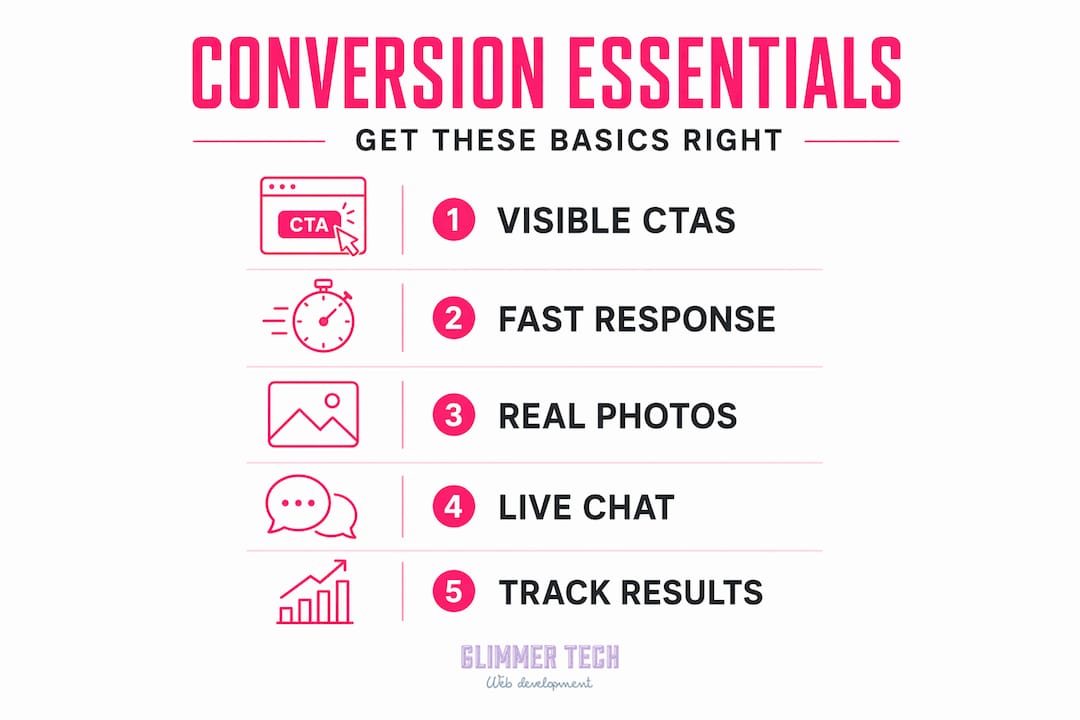
The foundation comes down to a few non-negotiable elements.
- Clear CTAs placed where visitors see them first. Your phone number, "Get a Quote" button, or "Book Now" link should be visible without scrolling. If a visitor has to hunt for how to contact you, most of them won't bother.
- Trust signals that do the convincing for you. ASE certifications, Google review stars, real photos of your team and shop floor, and customer testimonials are not decoration. They are the reason a stranger decides to trust you with their car.
- Intuitive navigation and fast load times. Without a clear user journey, visitors lose interest fast, even when your SEO is strong. Pages should load in under 3 seconds, and your menu should get anyone to any page in two clicks or less.
- Mobile-first design. Most local searches happen on a phone. If your site is slow, cramped, or hard to tap on mobile, you are losing leads before they even see what you offer.
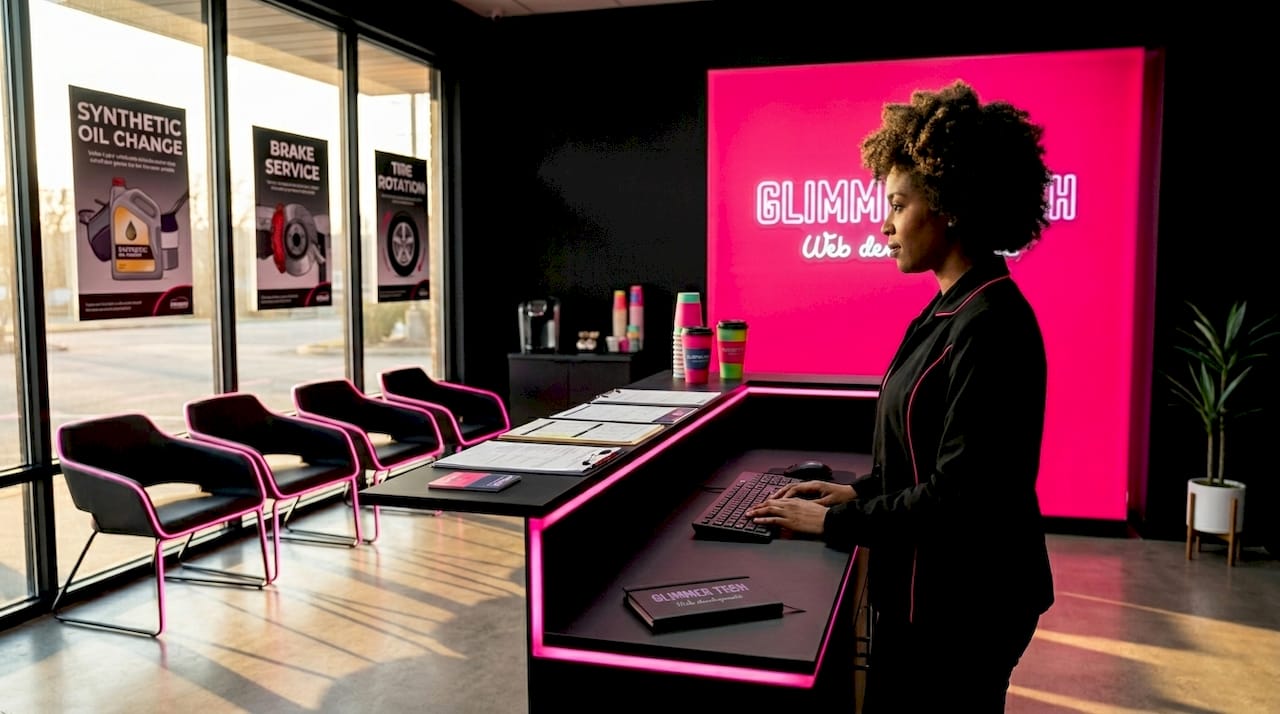
Pro Tip: Add a real photo of your front desk or waiting room to your homepage. Visitors connect with people and places, not logos. Shops that do this consistently see stronger engagement than those using stock photos.
The digital presence basics matter more than most owners realize. Get these right before investing in anything else.
Setting up your site for lead capture
Once your foundation is solid, the next step is structuring your site to capture leads the moment intent is highest, which is the second someone lands on your page.
Here is the sequence that actually works:
- Embed your quote form in the homepage hero section. Do not hide it on a separate "Contact Us" page. Embedding a form directly in the hero section increases conversions by 40 to 70 percent compared to sending visitors to a separate form page. The fewer clicks between intent and submission, the better.
- Add a live chat or AI assistant for after-hours coverage. Visitors browse your site at 9 PM, not just during business hours. Tools with AI-based lead capture can qualify inquiries, collect contact details, and send instant notifications to your team, even when the shop is closed.
- Route leads to the right person immediately. Every minute matters. Conversion drops steeply after the first few minutes of a lead submitting a form. Set up SMS or email alerts so your service advisor gets the notification the second it comes in, not an hour later.
- Sequence your conversion path logically. Show the inspection process first, then pricing, then the booking form. This reduces the anxiety visitors feel about committing before they understand what they are getting into.
The table below shows how response time directly affects your chances of converting a web inquiry into a paying customer.
| Response time | Lead qualification rate | Impact |
|---|---|---|
| Under 5 minutes | 21x higher than 30-min wait | Highest conversion window |
| 5 to 30 minutes | Moderate | Declining but still viable |
| 30 minutes to 1 hour | Low | Most leads have moved on |
| Over 1 hour | Very low | Leads are effectively lost |
| 42 to 47 hours (industry avg.) | Minimal | Standard poor practice |
Getting live chat integrated into your site is one of the fastest ways to cut your response time down to seconds.
Executing your visitor engagement strategy
With your structure and lead capture in place, the focus shifts to active engagement. This is where you turn website visitor engagement strategies into measurable results.
- Use live chat to intercept visitors before they leave. A simple chat prompt like "Need a quick estimate? Chat with us now." can stop a visitor from clicking away. Responding to visitors in real time keeps them engaged long enough to convert, and it creates a personal touch that a static page cannot replicate.
- Be transparent about pricing and process. Many shops lose leads simply because visitors feel uncertain about what something will cost or how long it will take. Publishing your service process and pricing before booking requests reduces friction and builds confidence. Visitors who understand what to expect are far more likely to book.
- Use sticky CTAs on both desktop and mobile. A floating call button or "Book Now" bar that stays visible as visitors scroll captures people at the exact moment they decide to act. Sticky buttons on mobile alone can capture up to 18 percent more traffic that would have left without taking action.
- Personalize follow-up to build loyalty. If someone fills out a form but does not book, a quick automated text or email referencing the specific service they asked about will outperform a generic "Did you get our message?" every time. Personalization does not have to be complex. It just needs to feel like it came from a real person.
- Track conversions with the right tools. Set up Google Analytics goals for form fills, use call tracking software to log which pages drive phone calls, and connect your chat tool to your CRM. Without this data, you are guessing.
Pro Tip: Create a dedicated landing page for your top service, such as brake repair or oil changes, with a form, pricing range, and a real customer testimonial. Sending paid ads to this page instead of your homepage can double or triple your conversion rate from that traffic.
Monitoring results and refining over time
Getting your site to convert is not a one-time task. The shops that consistently increase auto shop sales from their websites are the ones treating it like an ongoing system, not a project that ends at launch.
Start by setting up these four tracking pillars and reviewing them monthly.
| Tracking method | What it tells you | Tool to use |
|---|---|---|
| Form fill tracking | How many visitors submit quote or booking forms | Google Analytics Goals |
| Call tracking | Which pages and campaigns generate phone calls | CallRail or similar |
| Funnel visualization | Where visitors drop off before converting | Google Analytics Funnel |
| SMS click tracking | How many mobile visitors tap your text CTA | UTM parameters + Analytics |
Once you have data flowing, run A/B tests on specific elements. Test one thing at a time: the color of your CTA button, the headline above your form, or the placement of your testimonials. Small changes can produce significant lifts when they are tested against real traffic.
Update your trust signals regularly. A testimonial from three years ago carries less weight than one from last month. Keep your Google review count visible and refresh your photo gallery with recent work. Visitors notice.
Finally, build a follow-up sequence for leads that do not convert immediately. A three-step series over 7 days covering a check-in message, a service reminder, and a small incentive, such as a free tire rotation with a first oil change, can recover a meaningful percentage of leads that went quiet.
My honest take on what actually moves the needle
I've reviewed hundreds of auto shop websites, and the pattern is always the same. Owners assume the problem is traffic. They want more visitors. But when I dig into the numbers, the real failure is structural. The site gets decent traffic and converts almost none of it because there is no clear path to take action.
What I've seen work consistently is treating response time as a conversion lever, not just a customer service metric. The first responder wins the lead. Not the best-reviewed shop, not the cheapest one. The one that responded in 4 minutes instead of 4 hours.
The other thing most shops get wrong is hiding their pricing and process. I get it. You do not want to quote something before seeing the car. But showing a realistic range and walking visitors through how your inspection works before you ask them to book? That alone shifts the dynamic from "I'm not sure about this place" to "okay, they seem legitimate."
Your website is your best salesperson. It works 24 hours a day, 7 days a week, and it never calls in sick. But only if you build it to actually do the job.
— Annie
How Glimmer Tech helps auto shops convert more visitors
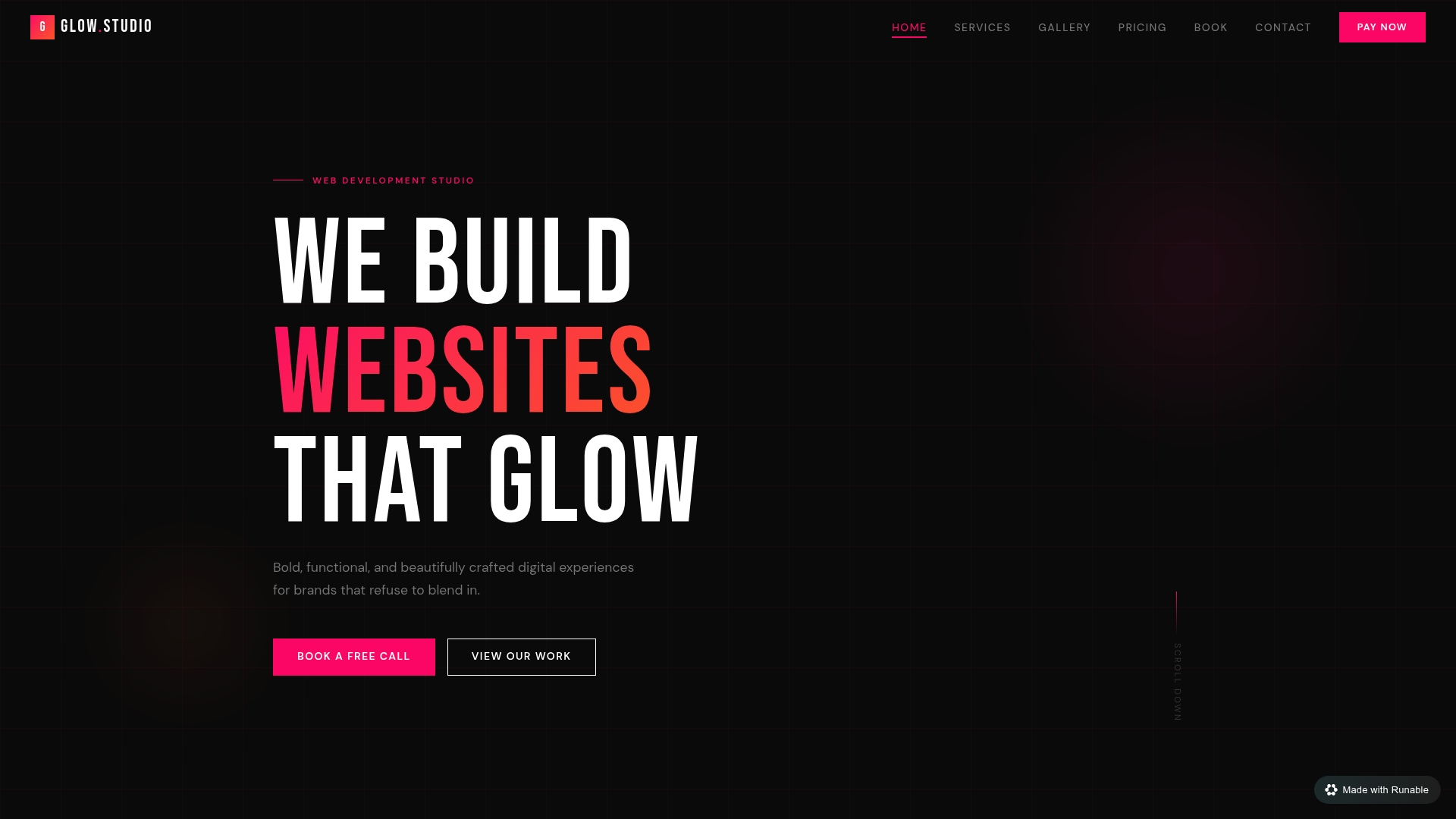
Most auto shop websites look fine but are built without conversion in mind. Glimmer Tech builds sites specifically designed to turn website traffic into customers, not just showcase your services. Every design includes strategically placed lead capture forms, mobile-optimized sticky CTAs, and fast load times that keep visitors engaged.
Glimmer Tech also integrates live chat, automated lead routing, and CRM-ready contact forms, so your team gets notified the second a visitor shows interest. The result is a professionally designed website that functions as a 24/7 sales and booking tool for your shop. With a 98% client satisfaction rate and a track record with small business owners, Glimmer Tech delivers results you can actually measure.
Ready to see what a conversion-focused site looks like for your shop? Visit glimmertech.digital to get started.
FAQ
What is a good conversion rate for an auto shop website?
Generic auto shop website templates typically convert between 1 and 2 percent of visitors. Purpose-built layouts with above-the-fold forms and clear CTAs can reach 6 to 11 percent, making design and structure the biggest variables.
How fast should I respond to website leads?
Responding within 5 minutes increases your lead qualification rate by 21 times compared to waiting 30 minutes. The industry average response time is 42 to 47 hours, which means fast follow-up alone can set you apart.
Does transparent pricing actually help conversions?
Yes. Showing your service process and pricing before asking visitors to book reduces the anxiety that causes people to leave without taking action. Visitors who understand what to expect are significantly more likely to commit.
What is the single best CTA change for mobile visitors?
Adding a sticky call or text button that stays visible as visitors scroll on mobile can capture up to 18 percent more leads that would have otherwise left without any contact. It removes the friction of hunting for a phone number.
How do I know which part of my website is losing leads?
Set up a funnel visualization in Google Analytics with your key pages and form submissions as steps. This shows you exactly where visitors drop off so you can test and fix the weakest points first.