

A website audit is a structured, in-depth review of a site's technical health, SEO performance, content quality, and user experience to identify problems that reduce traffic and conversions. Think of it as a full diagnostic for your digital presence. Business owners and marketers use audits to stop guessing and start fixing. Tools like Google Analytics, HubSpot Website Grader, and Hotjar make it possible to collect hard data across every layer of your site. The result is a prioritized roadmap that tells you exactly what to fix and why it matters for your bottom line.
What is a website audit and what does it cover?
A website audit is the industry term for a comprehensive site evaluation that spans technical infrastructure, content, SEO, and user experience. It is not a single check. It is a multi-layer process that surfaces hidden problems a casual review would miss entirely.
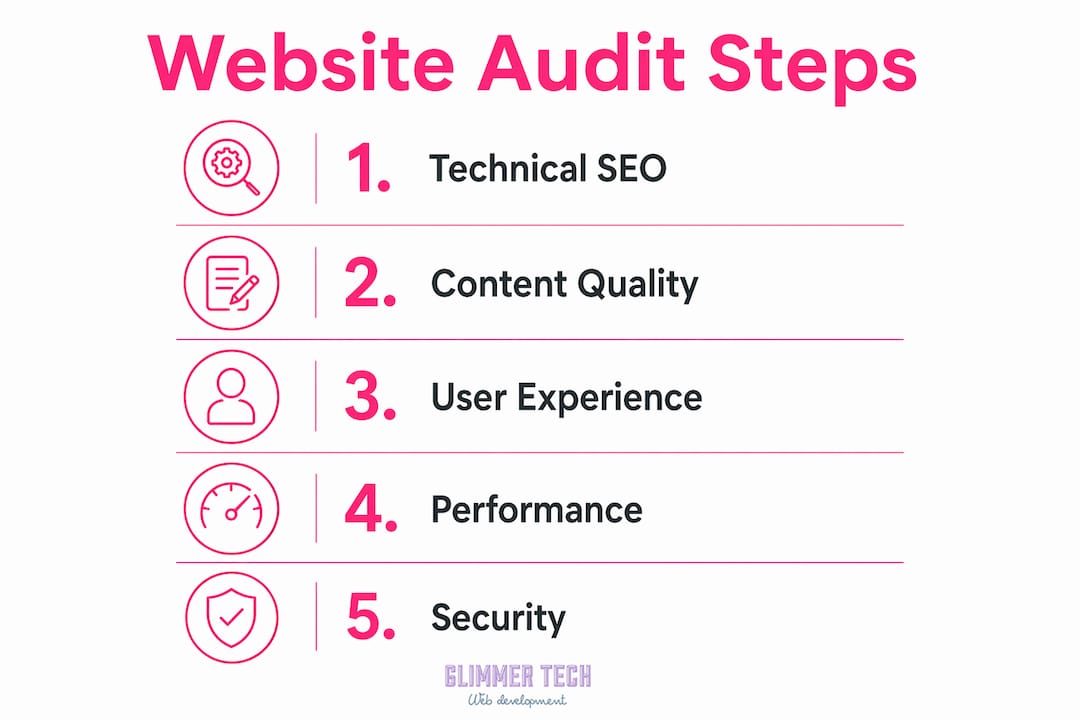
Full audits cover five core pillars: technical SEO, content quality, user experience, performance metrics, and security. Each pillar can independently hurt your traffic or conversions if neglected. A technically sound site can still lose rankings if its content fails Google's E-E-A-T standards. A beautifully designed site can still bleed revenue if its checkout flow has friction points.

The most important thing to understand about a website audit is that its value comes from what you do with the findings. Hidden problems quietly undermine traffic and conversions every day without triggering any obvious alarm. An audit makes those problems visible and measurable.
What are the main components of a website audit?
A full website audit breaks into five distinct areas. Each one requires different tools and a different lens.
Technical SEO and site health
Technical checks form the foundation of any audit. This layer covers crawlability, indexability, site speed, security, and accessibility. Search engines must be able to find, read, and rank your pages. If Googlebot cannot crawl a page, that page does not exist in search results regardless of how good the content is.
Tools like Screaming Frog and Google Search Console surface broken links, redirect chains, missing meta tags, and website indexing errors that block visibility. Page speed is measured against Google's Core Web Vitals benchmarks. Sites that fail those benchmarks lose rankings and users simultaneously.
Pro Tip: Run a crawl with Screaming Frog before any other audit step. It gives you a full map of your site's technical issues in one export, which makes every subsequent check faster and more focused.
Content quality and e-e-a-t
Content audits evaluate whether your pages answer user intent, demonstrate expertise, and earn trust. Google's E-E-A-T framework (Experience, Expertise, Authoritativeness, Trustworthiness) directly influences how pages rank. Thin content, duplicate pages, and outdated information all drag rankings down.
A content audit also checks internal linking structure. Weak internal linking means link equity does not flow to your most important pages, which limits their ranking potential.
User experience and conversion rate optimization
A UX audit reviews user flows like purchase paths and signup sequences to find friction points and drop-offs. Heatmaps from Hotjar show where users click and where they stop scrolling. Session recordings reveal exactly where confusion or frustration causes someone to leave.
Web accessibility is also evaluated here. Sites that exclude users with disabilities lose both audience reach and legal standing in markets with accessibility regulations.
Performance metrics and security
Performance audits measure load times, server response, and hosting reliability. Security checks confirm SSL certificate validity, scan for malware, and verify that sensitive user data is protected. A single security incident can destroy years of brand trust in days.
How does a website audit differ from an SEO audit?
Business owners frequently confuse these terms. The distinction matters because commissioning the wrong audit leaves real problems unfixed.
| Audit Type | Primary Focus | Key Tools | When to Use |
|---|---|---|---|
| Website Audit | Technical, SEO, UX, content, security | Screaming Frog, HubSpot, Hotjar | Full site health review |
| SEO Audit | Organic search visibility and ranking factors | Google Search Console, Ahrefs | Rankings and traffic drops |
| Technical Audit | Crawlability, speed, indexing | Screaming Frog, PageSpeed Insights | Site migration or launch |
| CRO Audit | Conversion funnels and user gaps | Hotjar, Optimizely | Low conversion rates |
| Accessibility Audit | Compliance and disabled user access | WAVE, axe | Legal compliance or UX gaps |
An SEO audit is one component of a broader website audit, not a synonym for it. An SEO audit tells you why you are not ranking. A full website audit tells you why you are not ranking, why users leave without converting, and why your site is vulnerable to security threats.
The most effective approach is to run a comprehensive audit that integrates all five dimensions. Mature auditing connects technical, content, UX, and security findings into evidence-led fixes tied to measurable business impact. Treating each audit type in isolation produces fragmented recommendations that are hard to prioritize and harder to act on.
How to conduct a website audit: tools and process
A structured process separates audits that produce results from audits that produce reports nobody reads. Follow these steps to run an audit that drives real change.
-
Define your goals and scope. Decide upfront whether you are focused on organic traffic, conversion rates, page speed, or all three. Without defined scope and KPIs, audits produce unfocused recommendations that are difficult to implement. Write down your top three objectives before opening a single tool.
-
Collect baseline data. Pull traffic trends, bounce rates, and conversion data from Google Analytics. Export crawl data from Screaming Frog. Check Core Web Vitals in Google Search Console. This data becomes your benchmark for measuring improvement after fixes are applied.
-
Run technical checks. Audit crawlability, broken links, redirect chains, page speed, SSL status, and mobile usability. A website sitemap review confirms search engines can access all priority pages.
-
Evaluate content and SEO. Identify thin pages, duplicate content, missing title tags, and weak internal linking. Check that your highest-traffic pages align with current user search intent.
-
Analyze UX and conversions. Use Hotjar heatmaps and session recordings to find where users drop off. Map your primary conversion funnels and identify every step where friction exists.
-
Compile and prioritize findings. A comprehensive audit report includes technical issues, SEO factors, content analysis, UX insights, and prioritized recommendations with associated impacts. Group fixes by effort and impact. Fix high-impact, low-effort issues first.
-
Implement, monitor, and repeat. Apply fixes in priority order. Track changes in Google Analytics and Search Console. Recommended audit cadence is quarterly or biannual to catch new issues before they compound.
Pro Tip: Assign each audit finding an owner and a deadline before the report is distributed. Audit reports without assigned accountability sit in inboxes and produce zero results.
What benefits can businesses expect from regular audits?
Regular website audits produce measurable improvements across every dimension of digital performance. The benefits are not theoretical.
- Higher search rankings. Fixing technical errors and improving content quality removes the barriers that prevent pages from ranking. Regular audits improve website traffic, rankings, and user engagement by uncovering issues like slow load times and outdated content.
- More conversions. UX audits identify the exact steps in your funnel where users abandon. Fixing those steps directly increases revenue without increasing ad spend.
- Stronger security posture. Security audits catch vulnerabilities before attackers do. A compromised site loses Google rankings, customer trust, and potentially customer data.
- Better accessibility. Auditing for construction website accessibility and general web accessibility standards expands your audience and reduces legal risk.
- Faster site performance. Performance fixes reduce bounce rates. Users abandon pages that take more than three seconds to load, and that behavior directly signals poor quality to search engines.
"The most valuable part of a website audit is using its findings to improve outcomes, as hidden problems quietly undermine traffic and conversions." — HubSpot
The compounding effect of regular audits is significant. Each audit cycle builds on the last, progressively closing gaps that competitors may not even know exist on their own sites.
Key takeaways
A website audit is the most direct way to identify what is stopping your site from performing at its full potential across traffic, conversions, and security.
| Point | Details |
|---|---|
| Audit definition | A website audit evaluates technical health, SEO, content, UX, and security in one structured review. |
| Five core pillars | Technical SEO, content quality, user experience, performance, and security must all be assessed together. |
| Audit vs. SEO audit | An SEO audit covers rankings only; a full website audit covers all five dimensions for complete site health. |
| Structured process | Set goals first, collect data, run checks, prioritize findings, and assign owners before implementing fixes. |
| Audit frequency | Run audits quarterly or biannually to catch issues early and maintain competitive site performance. |
Why most website audits fail to deliver results
I have reviewed dozens of audit reports over the years, and the pattern is almost always the same. The audit itself is thorough. The report is detailed. Nothing gets fixed.
The problem is almost never the audit. It is the setup. Teams commission audits without defining what success looks like. They receive a 60-page report with 200 recommendations and no clear starting point. The report gets filed, and the site stays broken.
The audits I have seen produce real results share two traits. First, the scope was defined before a single tool was opened. The team agreed on three to five business objectives and the audit was designed around those objectives. Second, every finding was assigned to a specific person with a specific deadline before the report was distributed.
A technically sound site can still lose visibility and conversions if content quality or UX issues exist. That is why I push back hard against single-dimension audits. An SEO audit that ignores UX will recommend fixes that improve rankings but not revenue. A UX audit that ignores technical SEO will improve conversions for the traffic you have while missing the traffic you could have.
The other mistake I see constantly is treating an audit as a one-time event. Your site changes. Your competitors change. Google's algorithm changes. An audit from 18 months ago is not a health check. It is a historical document. Build quarterly reviews into your marketing calendar the same way you build in budget reviews. The businesses that do this consistently outperform those that audit reactively, after something has already gone wrong.
— Annie
Ready to see what your site is really doing?
Knowing what a website audit covers is the first step. Acting on that knowledge is where growth actually happens.

Glimmer Tech works with small business owners and marketers to identify exactly what is holding their sites back, from technical errors and SEO gaps to UX friction and security vulnerabilities. With a 98% client satisfaction rate and a track record of measurable results, Glimmer Tech turns audit findings into real improvements. If you are ready to stop guessing and start fixing, explore Glimmer Tech's web services and see what a performance-driven audit can do for your business.
FAQ
What is a website audit in simple terms?
A website audit is a full review of your site's technical setup, content, SEO, and user experience to find problems that hurt traffic and conversions. It produces a prioritized list of fixes tied to measurable business outcomes.
How much does a website audit cost?
Most audits cost between $500 and $7,500 depending on the size and depth of the review, with enterprise-level audits trending higher due to scope. Understanding cost upfront helps you choose the right audit type for your budget.
How often should you run a website audit?
The recommended cadence is quarterly or biannually. Regular audits catch new issues before they compound and keep your site competitive as search algorithms and user expectations evolve.
What tools are used in a website audit?
Common audit tools include Google Analytics, Google Search Console, Screaming Frog, HubSpot Website Grader, and Hotjar. Each tool covers a different audit dimension, from crawl data to user behavior recordings.
Is a website audit the same as an SEO audit?
No. An SEO audit focuses specifically on search visibility and ranking factors. A full website audit includes SEO plus technical health, content quality, user experience, performance, and security checks.